
Search
A Shepherd Molded by the Spirituality of St. Philip Neri
-
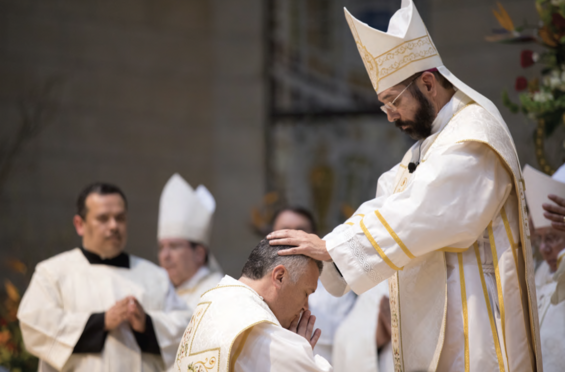 January 23, 2026“The whole world, and all that it contains—everything is vanity.” These words, from a famous poem by St. Philip Neri (1515–1595), capture the spiritual vision of this saint, both the founder of the Oratory and the favorite saint of our new bishop, Mario Avilés. The quote serves as a reminder to look always toward our final destination—heaven—and to make every life choice with that goal in mind.
The Avilés family’s home parish, Parroquia de Nuestra Señora de Fátima in Tlalnepantla, Mexico City, is under the pastoral care of the Oratory Fathers. As a result, all the priests that young Mario encountered were Oratorians. As he began to discern a call to the priesthood, their way of life and ministry deeply attracted him. Following in their footsteps felt natural. “I didn’t participate in youth groups at my parish,” Bishop Avilés recalled, “but we went to Mass every Sunday, and I always liked the priests and what they were doing.”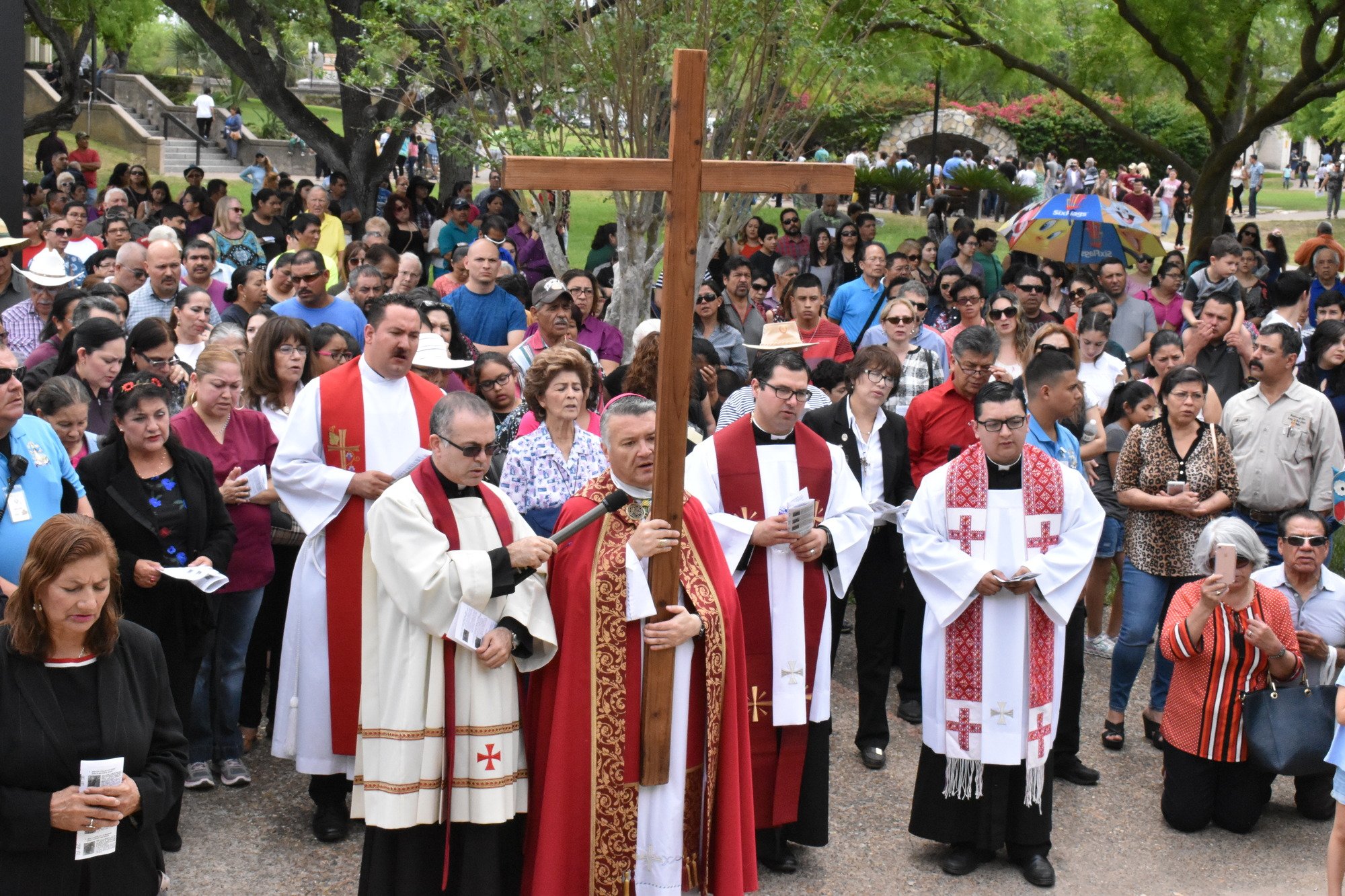 That attraction eventually led him to enter the seminary while still in high school at age 16. “I went to school and attended some classes, but then I came home every weekend,” he said. After graduating, he initially expected to remain with the Oratory community in his home parish. However, his abilities soon caught the attention of a member of the Oratory in Pharr, Texas.
Fr. Leo Francis Daniels, who later attended Bishop Avilés’ ordination as auxiliary bishop in 2018, remembered their first impressions: “We got to know him—he was a smart young man and already knew some English. He picks up languages very quickly.” Today, Bishop Avilés speaks English, Spanish, and Italian fluently and has proficiency in several other languages. “He was a product of postmodern Mexico,” Fr. Daniels continued. “He watched a lot of American television and was steeped in American culture. I thought he would be a good fit for our community, so I invited him to the Pharr Oratory.”
Bishop Avilés joined the Pharr Oratory in 1988 after graduating from high school. The move was a major change. “Pharr was a very small town at the time, and I was coming from the metropolis of Mexico City,” he recalled. Yet the call was strong, and today he says he would not change a thing.
While continuing his formation as a seminarian and Oratorian, he received a scholarship to study in Rome at the Pontifical Athenaeum Regina Apostolorum. During his four years there, he earned a bachelor’s degree in philosophy and Sacred Scripture, became fluent in Italian, and experienced the universal Church firsthand during the papacy of what is now St. John Paul II.
He was ordained to the priesthood on July 21, 1998, at the Basilica of Our Lady of San Juan del Valle–National Shrine, and was assigned to St. Jude Thaddeus Parish in Pharr, which is entrusted to the Oratory. Five years later, he became pastor of Sacred Heart Parish in Hidalgo. Oratory Fathers typically remain in the Oratory they enter, a stability Bishop Avilés appreciated. “I liked this stability because you can really make an impact,” he said.
At Sacred Heart, he established the parish’s Life Teen youth program and later became principal of the Catholic school in Pharr (see “A Teacher at Heart,” p. xx), where he also launched the athletics program in 2002.
Yet God had more in store. In September 2012, Bishop Avilés was elected Procurator General of the Confederation of the Oratory of St. Philip Neri on the first ballot. In this role, he served 85 Oratories and more than 550 priests and brothers worldwide, traveling extensively throughout Europe, South Africa, and North and South America. Remarkably, even while carrying out these international responsibilities, he continued serving as pastor in Hidalgo.
His term as Procurator General came to an earlier end when he was named auxiliary bishop of the Diocese of Brownsville, a transition that required him to leave the Pharr Oratory—his spiritual home and family for nearly 30 years.
“I felt like I was losing a son,” said Fr. Daniels, who was then provost of the Congregation of the Oratory of St. Philip Neri in Pharr. Oratorians do not take vows to the community; instead, each Oratory is a pontifical house where priests and brothers live together according to the spirituality of their founder. They pray together, share meals, support one another, and grow as a family.
When Bishop Avilés was ordained, canon law required that he no longer live in the Oratory house. “Canon law says he can’t live with us,” Fr. Daniels explained, “but I’m happy for him and happy for the diocese. You couldn’t get anyone better,” he said at the time of the 2018 ordination.
Now, Bishop Avilés’ service to the Church is leading him from the Rio Grande Valley to Corpus Christi. While the Diocese of Brownsville takes pride in his appointment by Pope Leo XIV, many also grieve the loss of a beloved auxiliary bishop. “Everyone here just loved working with him. He is so caring,” said Brenda Nettles Riojas, communications director and editor of The Valley Catholic.
Those who worked closely with him in parish life echo that sentiment. Elisa Garza, former director of religious education at Sacred Heart Parish in Hidalgo, shared, “Cuídenmelo mucho—take good care of him. I will always give thanks to God for his work in our beautiful community.” She added, “He was a light and continues to be a light in each of us, especially through his spirituality.”
Looking ahead, Bishop Avilés is confident about his transition to Corpus Christi. “I think I will adapt very fast,” he said. “The culture is not that different.” Many Catholics there are also of Hispanic descent, with devotions passed down through generations—often by abuelas—including a deep love for Our Lady of Guadalupe and other cherished traditions.
For Bishop Avilés, respecting and nurturing these traditions is essential. Faith, he believes, comes from the heart and from where it was first received. As a shepherd, he is committed to serving every group in a way that honors their culture and spiritual heritage. At the same time, the mission of the Church remains universal everywhere: “the mission of Jesus Christ—proclaiming what is good, right, and just.”
With contributions from The Valley Catholic